For many working in global health, international conferences are more than just gatherings, they are opportunities to listen, learn, reconnect, and reflect on the shared responsibility of improving the lives of communities around the world.
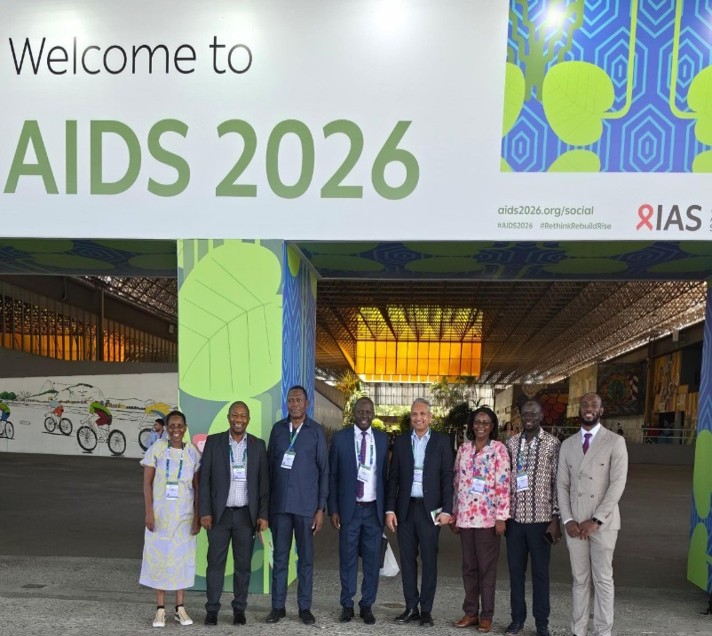
From 26–31 July 2026, Rio de Janeiro, Brazil, became a meeting point for thousands of people united by a common purpose at the 26th International AIDS Conference (AIDS 2026). Under the theme “Rethink. Rebuild. Rise.”, the conference brought together governments, communities, researchers, civil society organisations, development partners, and health leaders to exchange experiences and explore new pathways towards ending HIV as a public health threat.
Among the delegates representing Uganda at this important global platform was Tonnie Stieve Luyimbazi, Executive Secretary/Country Coordinator of the Uganda Country Coordinating Mechanism (UCCM) for the Global Fund to Fight HIV, Tuberculosis and Malaria.
The conference provided an opportunity not only to engage in global conversations but also to reflect on Uganda’s journey, a journey built on resilience, partnerships, and the dedication of communities, health workers, government institutions, and development partners.
“Uganda’s progress in addressing HIV has been shaped by collaboration and shared responsibility. The lessons and partnerships gained from platforms such as AIDS 2026 remind us of the importance of continuing to strengthen country-led approaches that ensure everyone can access quality prevention, treatment, care, and support,” he reflected. — Tonnie Stieve Luyimbazi
Throughout the conference, discussions highlighted the evolving nature of the HIV response and the need to sustain progress through innovation, stronger health systems, meaningful community engagement, and strategic investments. Participants shared experiences from different parts of the world, demonstrating that while countries face unique challenges, the commitment to ending HIV remains a shared global goal.
For Uganda, these global engagements continue to complement ongoing efforts to strengthen governance, accountability, and coordination of Global Fund-supported programmes addressing HIV, tuberculosis, and malaria. Through the Uganda Country Coordinating Mechanism, stakeholders continue to work together to ensure that investments are effectively aligned with national priorities and deliver meaningful impact for communities.
Beyond the discussions and sessions, AIDS 2026 was also a reminder of the power of partnerships. The progress achieved in the fight against HIV has always been driven by people working together; governments, communities, health professionals, advocates, and partners each contributing to a collective vision of healthier and more resilient societies.
As delegates departed Rio de Janeiro, they carried with them renewed commitments, strengthened partnerships, and a reminder that global conversations only create impact when they translate into action at community and country level.
For Uganda, the call to “Rethink. Rebuild. Rise.” is not only a conference theme — it is a continued commitment to protecting lives, strengthening health systems, and ensuring that no one is left behind in the journey towards ending HIV, tuberculosis, and malaria as public health threats.